A door, its hardware and the safety response form one system.
Frequent access creates mechanical loads and human-factors demands that a fixed panel does not experience. Door weight, frame stiffness, hinge position, sag, latch behaviour and alignment must support reliable closing and dependable safety-device operation.
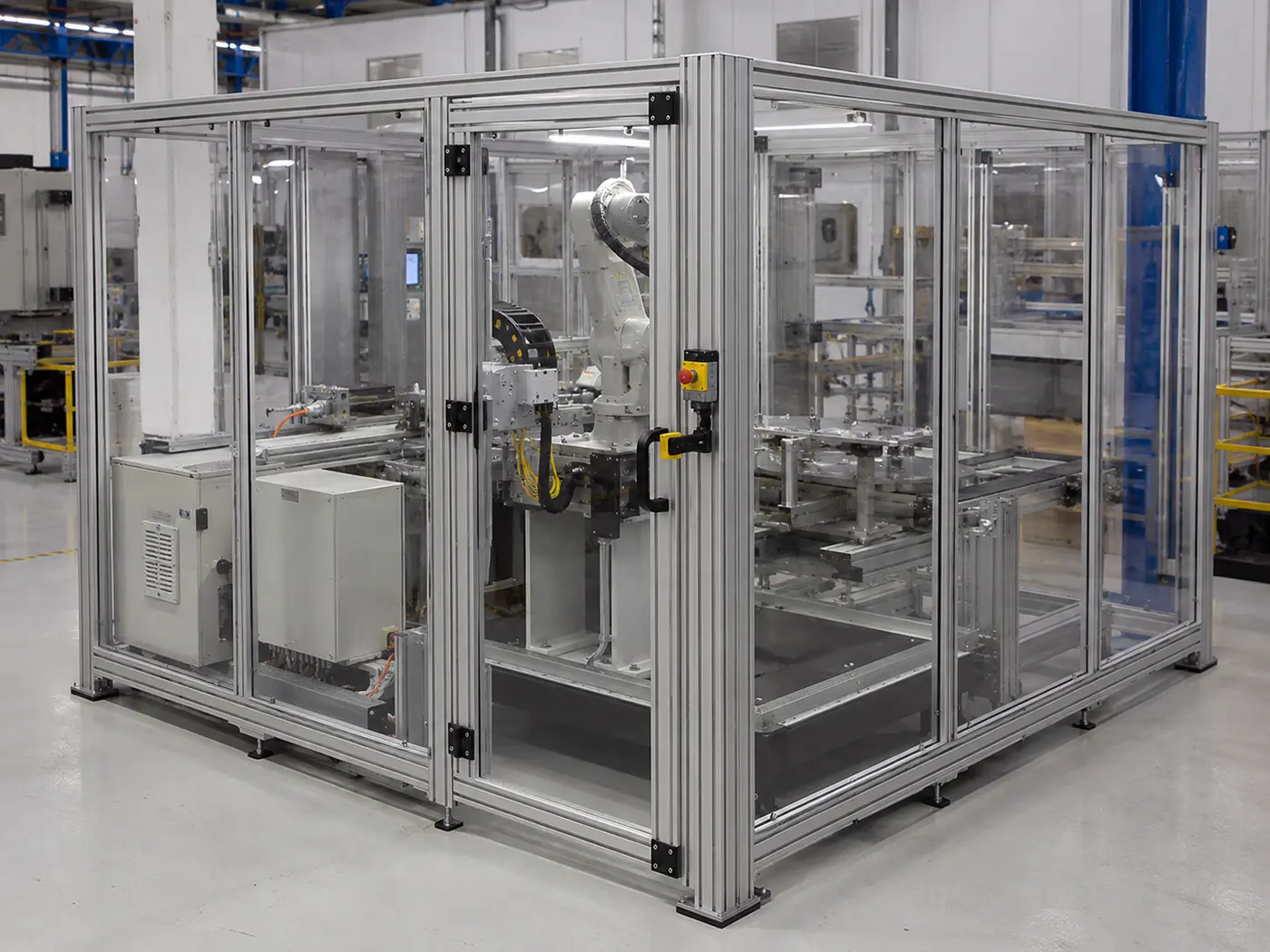
Access configurations.
Hinged doors
Single or double doors with hinges, handles, stops and alignment details selected for the duty cycle.
Sliding access
Space-efficient sliding panels where swing clearance is limited or wider openings are needed.
Lift-off sections
Tool-removable or monitored panels for less-frequent major maintenance access.
Safety integration options.
Depending on the machine-specific risk assessment, access may involve coded non-contact switches, tongue-operated switches, hinge switches, guard locking, trapped-key systems or another protective measure. The device is only one part of the function: control logic, stopping response, reset location, restart prevention and validation also matter.
Frequently asked questions.
Not automatically. The decision depends on the access frequency, hazard, stopping performance, operating modes and risk assessment. Where opening the door must cause or maintain a safe state, a suitable interlocking safety function is normally required.
Guard locking may be required where a person could reach the hazard before dangerous movement or another hazardous condition has ceased, or where process integrity requires controlled release. The complete safety function must be assessed.
Yes. A replacement or upgraded door can address frame stiffness, hinge capacity, support, alignment, closing hardware and interlock mounting rather than simply recreating the original weakness.