What a machine guard panel needs to do.
A clear panel can provide direct process visibility while forming a physical boundary around hazardous motion. Its performance depends on far more than the sheet material: span, thickness, frame stiffness, edge engagement, fastener detail and cut-outs all influence the finished guard.
Oxford Machine Guarding can support individual panels, full panel schedules and complete framed guarding assemblies. The scope is agreed from photographs, drawings, samples or a site survey.
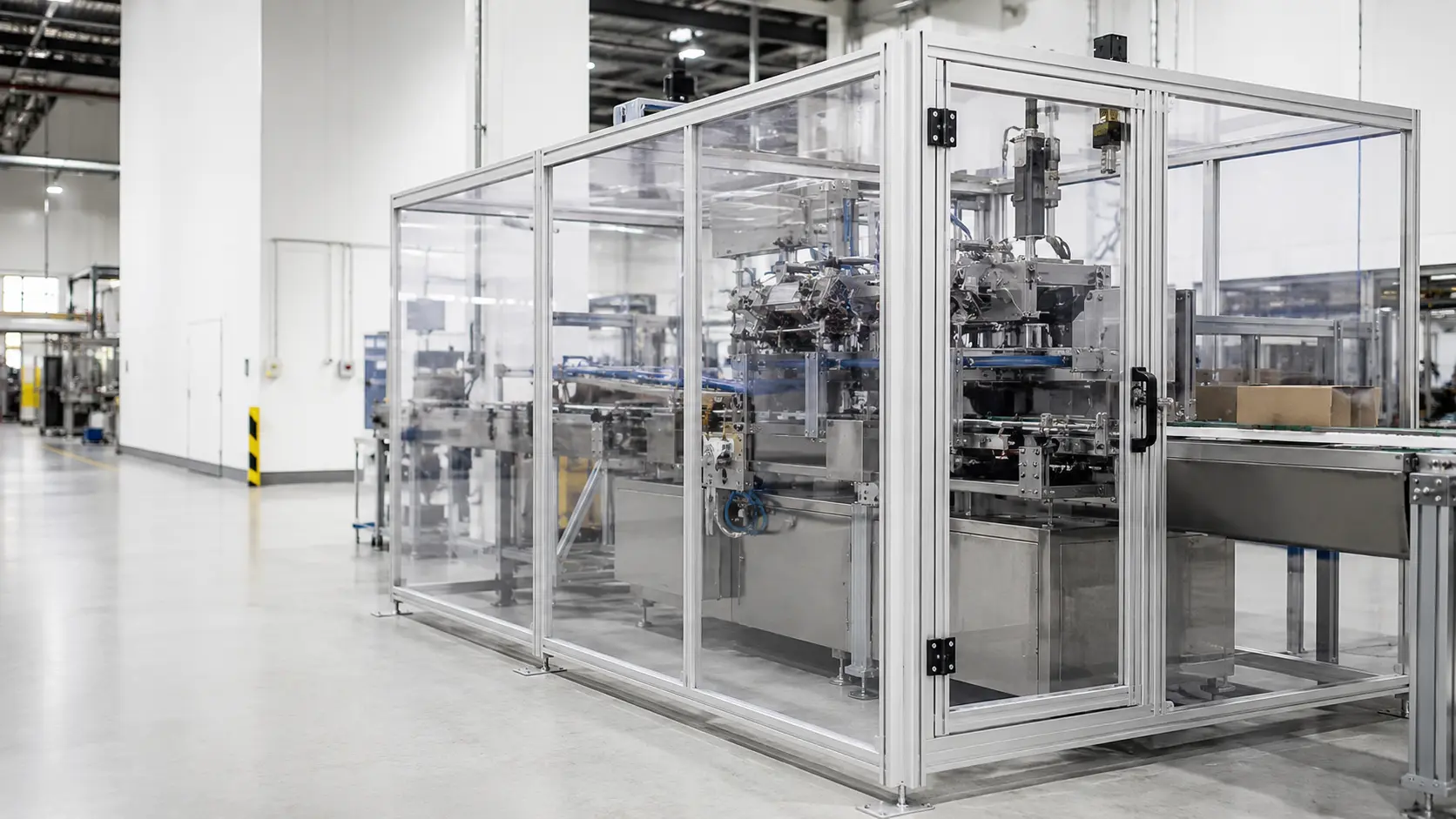
Panel configurations.
Framed panels
Clear infill retained within aluminium-profile or fabricated frames for stiffness and repeatable assembly.
Direct-mounted panels
Machined sheets secured to suitable machine structures using designed fixings and appropriate edge support.
Viewing windows
Smaller transparent sections integrated into solid guards where process observation is needed.
Information that improves the quotation.
- Overall panel width, height and nominal thickness
- Hole diameters and centre positions
- Required cut-outs, radii, slots and notches
- Existing frame or fixing-channel details
- Expected impact, ejection or containment duty
- Cleaning chemicals, heat, oils or outdoor UV exposure
- Quantity and whether future repeat supply is required
Frequently asked questions.
There is no universal thickness. Expected impact, panel span, fixing centres, edge support, temperature, ejection risk and the consequence of failure all affect selection. A project-specific review is required.
Yes. Panels can be cut, drilled, routed and detailed for hinges, handles, fasteners, cable routes and controlled process openings. Edge distance and local stresses need to be considered.
Usually, provided the retained frame, channels and fixings are in serviceable condition and the new panel can be secured without creating unsafe gaps or reach routes.